

- The House and Civil Rights
- Impeachment: President Andrew Johnson
- The People’s House: A Guide to Its History, Spaces, and Traditions
- Electronic Technology in the House of Representatives
- History of the House Page Program
- The 1954 Shooting
- Congressional Sporting Events
- Florence Kahn: Congressional Widow to Trailblazing Lawmaker

Whereas: Stories from the People’s House
Design Tells a Story: Oral History and Campaign Buttons
In a series of interviews conducted by the Office of the Historian, former Congresswomen talked about buttons their campaigns produced at different times during their careers. They described how and why they chose certain layouts, themes, and slogans. As these oral histories show, design tells a story.
Motif
Candidates often combine color, shape, and typography on campaign buttons to convey messages about their platform. For Representatives Shelley Berkley and Nancy Johnson, the imagery they used both alluded to their home states and symbolized their candidacy.
Shelley Berkley of Nevada
Nevada Representative Shelley Berkley’s 2000 campaign button features a red, white, and blue color scheme and few words. In block, uppercase white letters against a rectangular blue background, her name takes up most of the space. Between the “K” and “L” of “Berkley,” the shape of Nevada snugly nestles into the typography. As she explained in her oral history, the blue rectangular border was purposeful: “I’m very definite,” she explained. “I’m not wishy-washy.”
Nancy Lee Johnson of Connecticut
Using blue, gold, and white, Connecticut Representative Nancy Johnson’s campaign button adopted the colors of her state flag. Three white stars underscore Johnson’s name, and a gold star extends past the right edge. The stars, Johnson remembered, were suggested by a political consultant because, she said, she “was seen as quite the star.”

|
"I'm Not Wishy-Washy"
The Honorable Shelley Berkley, U.S. Representative of Nevada
|
“I can say without fear of contradiction,” Representative Shelley Berkley of Nevada pronounced, “that I thought my campaign logos were outstanding.” Members of Congress rarely speak about their buttons’ designs, and Berkley’s insights give a rare view into the thinking behind the decisions.
|
Collection of the U.S. House of Representatives
About this object |
Item 1/4 |
"I'm Not Wishy-Washy"
The Honorable Shelley Berkley describes her 2000 campaign button design.
|
The Honorable Shelley Berkley, U.S. Representative of Nevada
Interview recorded July 22, 2019
|
Item 2/4 |
During her nearly quarter century in the House, Johnson became the first Republican woman to gain a seat on the influential Ways and Means Committee.
|
Collection of the U.S. House of Representatives
About this object |
Item 3/4 |
Campaign Literature
The Honorable Nancy Lee Johnson discusses designing campaign literature while keeping costs low, and which motifs were effective for her race.
|
The Honorable Nancy Lee Johnson, U.S. Representative of Connecticut
Interview recorded December 3, 2015
|
Item 4/4 |

Name
The decision to include a candidate’s name is perhaps an obvious choice in campaign button design. But for some lawmakers—like Representatives Sue Myrick and Connie Morella—the name they chose and the way it appeared on the button held significance.
Sue Myrick of North Carolina
“For Congress SUE Myrick” appears emblazoned in red letters against a white background on this 1994 campaign button. The North Carolina Representative’s first name, “Sue,” is twice the size of the other words and draws the eye. For Myrick, that detail was important. “When we did our advertising, we just always did ‘Sue,’ ” she recalled. She said it was a way for her to remain grounded. “I was Sue before I got elected. If I’m elected, I’ll be Sue in office, and I’ll be Sue when I leave. And if I’m not, I don’t deserve to be here.”
Constance A. Morella of Maryland
One of Connie Morella’s congressional campaign buttons features just her signature in white lettering against a red background. Key to the design was its simplicity. The Maryland Representative wanted her button to seem friendly and approachable. “It’s a personal element,” she described.
Sue Myrick, a former mayor of Charlotte, North Carolina, won election in 1994 as part of the “Republican Revolution.” She served nine terms in the House and was a member of the powerful Rules Committee.
|
Collection of the U.S. House of Representatives, Gift of Trent LeDoux
About this object |
Item 1/4 |
Staying Grounded
Using “Sue” on her campaign buttons was more than an easy way for voters to remember Congresswoman Sue Myrick’s name. She used it as a promise and a reminder to stay grounded.
|
The Honorable Sue Myrick, U.S. Representative of North Carolina
Interview recorded March 14, 2016
|
Item 2/4 |
As the facsimile signature on this button demonstrates, Maryland Representative Connie Morella believed in a personal connection with her constituents.
|
Collection of the U.S. House of Representatives
About this object |
Item 3/4 |
"Connie"
The Honorable Constance A. Morella describes the personal element of her campaign buttons.
|
The Honorable Constance A. Morella, U.S. Representative of Maryland
Interview recorded June 16, 2015
|
Item 4/4 |
Slogan
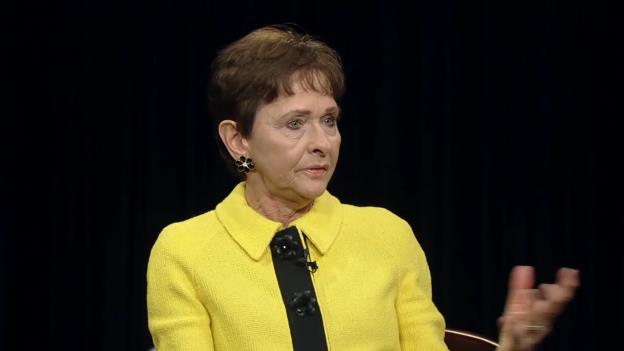
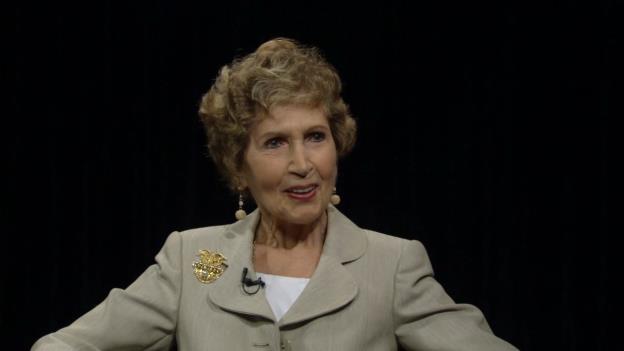
In just a few words, campaign slogans can convey something unique or memorable about candidates. A slogan can help them stand out in a packed special election or invoke a candidate’s personal history, as was the case for slogans selected by Representatives Eva Clayton and Susan Molinari. For Representative Claudine Schneider, however, a campaign slogan came not from the candidate, but from the community the aspiring lawmaker hoped to represent.
Eva M. Clayton of North Carolina
Eva Clayton’s campaign button includes the number of her North Carolina district, her name, and the slogan: “The Best for the First.” In her special election in 1992, she faced six other candidates. Instead of attacking her opponents, she used her slogan to promote and uplift herself. “We had no apologies for thinking we were the best,” she remembered.
Susan Molinari of New York
New York Representative Susan Molinari’s rectangular 1990 campaign button used bold text to emphasize her last name and featured the slogan “A New Generation of Leadership.” The slogan called attention to the fact that her father, Representative Guy Molinari, had served in Congress for a decade, while also helping her establish her own identity and perspective.
Claudine Schneider of Rhode Island
Representative Claudine Schneider’s 1980 campaign pin reads “This Time Claudine” printed in white text against a deep blue background. After losing her first election bid, Schneider spotted “Next Time Claudine” bumper stickers in her community. She adopted that message from her voters to develop this slogan when she ran again two years later.
Eva Clayton was the first African-American woman elected to Congress from North Carolina.
|
Collection of the U.S. House of Representatives
About this object |
Item 1/6 |
"The Best for the First"
The Honorable Eva M. Clayton recalls how she created a slogan for her 1992 special election pin.
|
The Honorable Eva M. Clayton, U.S. Representative of North Carolina
Interview recorded May 15, 2015
|
Item 2/6 |
Hailing from a Republican political dynasty that had played a role in Staten Island politics for nearly 50 years, she rose to become Vice Chair of the Republican Conference in the House of Representatives.
|
Collection of the U.S. House of Representatives
About this object |
Item 3/6 |
Campaign Slogans
The Honorable Susan Molinari had experience in creating campaign slogans—she created one for her father when he served in the House. Here she discusses her own campaign slogan, “A New Generation of Leadership.”
|
The Honorable Susan Molinari, U.S. Representative of New York
Interview recorded January 8, 2016
|
Item 4/6 |
The first woman elected from Rhode Island to the U.S. House of Representatives, Claudine Schneider also was the first Republican Representative to serve the state in more than 40 years.
|
Collection of the U.S. House of Representatives
About this object |
Item 5/6 |
Claudine for Congress
When it came to campaign buttons, Congresswoman Schneider wanted the emphasis on her first name. After her unsuccessful bid for Congress, voters of the district sported “Next Time, Claudine” bumper stickers. For her second campaign, she used a slogan that already had a ring to it.
|
The Honorable Claudine Schneider, U.S. Representative of Rhode Island
Interview recorded January 20, 2016
|
Item 6/6 |
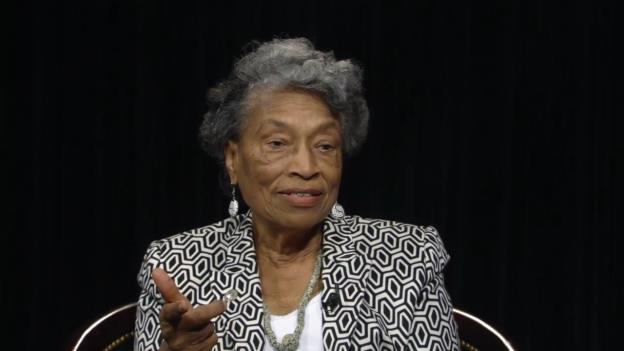
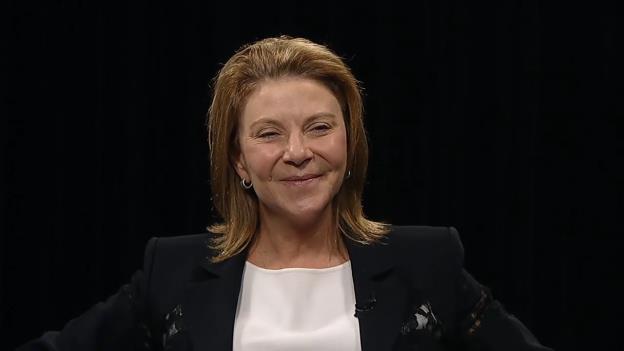

For more about how candidates have used visual elements to appeal to voters, explore our digital exhibition Campaign Collectibles: Running for Congress. And for more oral histories about running for Congress, visit our oral history section.
