Read essays that provide historical context about four distinct generations of African Americans in Congress. Among the topics discussed in each essay are institutional developments, legislative agendas, social changes, and national historical events that have shaped the experiences of Black Members of Congress since Reconstruction.

For more than 150 years, Black men and women have won election to Congress despite having to overcome formidable, ever-changing barriers to Black political participation. The story of Black Americans in Congress is not confined to Capitol Hill. It is a national story of electoral triumphs and discouraging setbacks, hard-won victories and long periods of political exclusion.
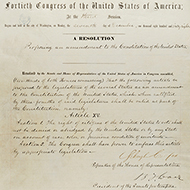
Twenty Black Representatives and two Black Senators served in Congress between 1870 and 1901. Each displayed a formidable array of skills as a lawmaker, orator, and activist. They pursued ambitious reforms while diligently working to protect the interests of their constituents.

Explore the many contradictory experiences of Black Americans on and off Capitol Hill during the first six decades of the twentieth century, a period marked by migration and the struggle to overcome political exclusion.

From 1965 to 1990, the number and influence of African Americans in Congress increased significantly. Black Representatives worked to win seats on powerful committees, and some attained roles in Democratic leadership.

As more Black Members won election to Congress, often from safe districts, they composed an ever-greater proportion of the membership of the Democratic Caucus. This afforded Black Members the chance to rise in party leadership in committees and within the caucus.


